Commentary
Today, 16 December, is Victory Day. On this day in 1971, Bangladesh achieved independence through a long nine-month bloody struggle. Yet, even after 54 years of that hard-won independence, the reality is that all citizens of the country still do not enjoy the fruits of that freedom equally.
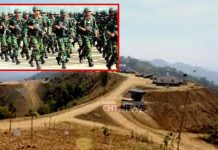
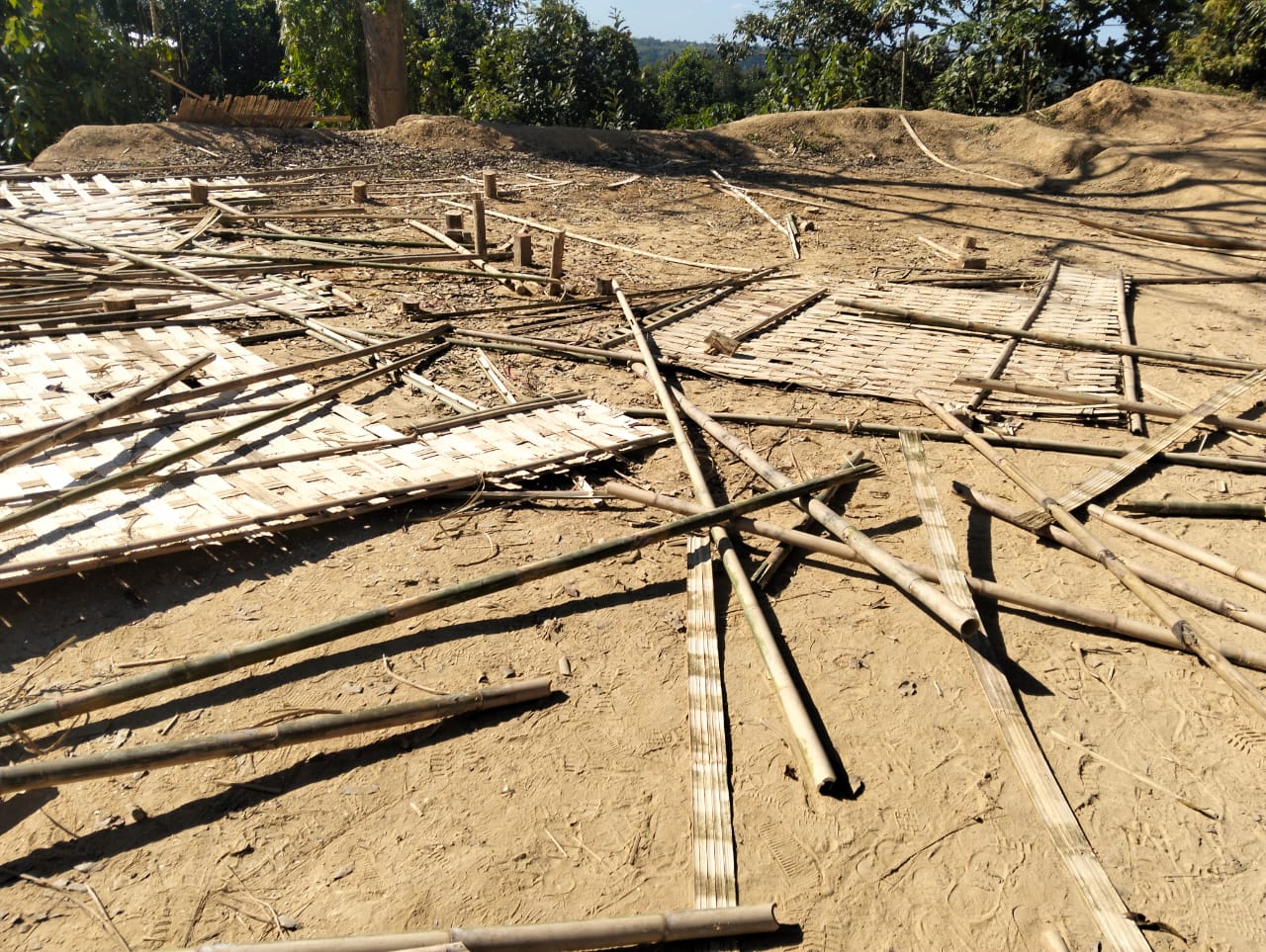
While celebrations and festivities marking Victory Day are taking place in one part of the country, a very different reality is unfolding in Egojyachari of Majlong in Sajek Union, Rangamati. Allegations have emerged that a primary school under construction—funded by local residents—has been demolished by the Forest Department. In protest, local people have blocked the road. An even more serious allegation is that the army assisted the Forest Department in demolishing the school. This is not merely an incident of demolishing a school; it is a direct attack on a constitutionally guaranteed fundamental right and on the dignity of citizens.
The tragic reality is that on this very Victory Day, the national flag could have been hoisted on the school grounds. Children could have listened to stories of independence while holding the red-and-green flag in their hands. Instead, the area has been overtaken by destruction, protests, and uncertainty surrounding the future of children’s education.
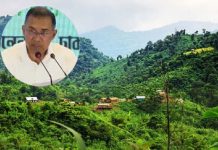
At one time, dense forests were cleared and indigenous hill people were displaced to develop Sajek as a tourist destination. Although no Muslim community resides there, a model mosque has been built for the convenience of tourists. Yet Sajek residents have no adequate hospitals and no proper educational institutions suitable for children. While the national average literacy rate stands at 76 percent, the literacy rate in Sajek Union is only 27.2 percent.
The interim government has announced another initiative, under which Starlink satellite internet connectivity will be provided to 100 schools in selected hill areas. This aims to enable students in remote regions to participate in online education and allow experienced teachers to deliver digital classes. It is a technologically forward-looking initiative intended to promote equality in education.
This initiative by the government is commendable. However, if there are no schools to begin with, can such advanced digital systems effectively ensure education for children? And amid such uncertainty in children’s educational lives, how effective can online education via Starlink internet really be?
This contradiction forces us to confront difficult questions. Independence is not merely a one-day celebration; independence means ensuring justice and dignity. As long as any group of people in this country is forced to take to the streets to protect its rights, the completeness of independence will remain in question.
On this Victory Day, the blocked road in Sajek reminds us that the struggle for the liberation of the hill people is not yet over.
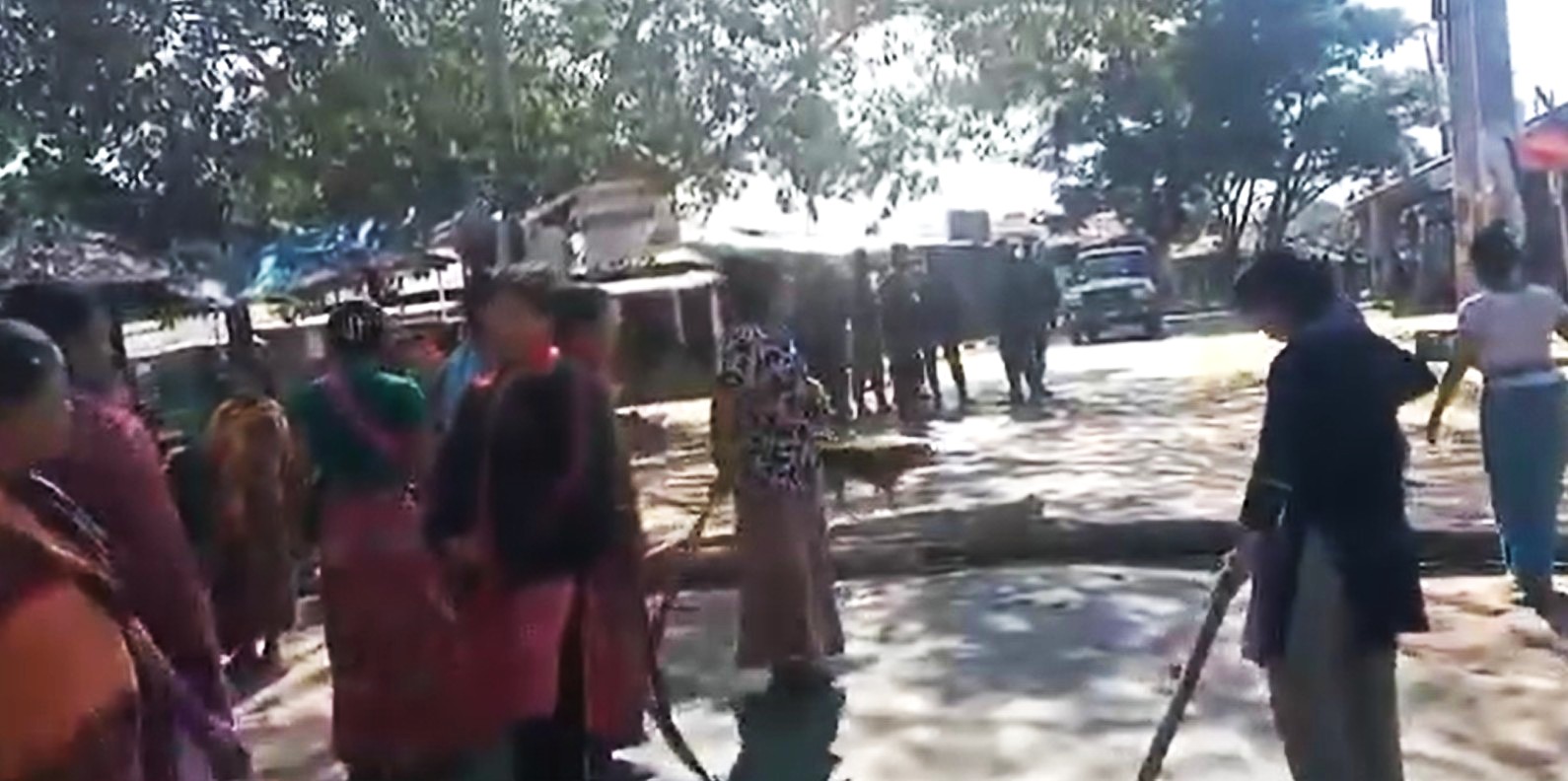
Another question arises. It is the government’s responsibility to ensure education for all—this is a fundamental right of citizens. To guarantee this right, the government must build schools and colleges even in the remote areas of the Chittagong Hill Tracts. But when people, on their own initiative and with their hard-earned money, build schools and colleges, why does a powerful state force stand in their way?
The justification given is that these schools and colleges are being built on Forest Department land. But residents ask: if army camps, police camps, mosques, and tourism facilities can be built on Forest Department land in Sajek, why is the construction of educational institutions obstructed? Why does the Forest Department become hyperactive only when hill people seek to build educational institutions, while forest laws seem to disappear when police or army camps and other facilities are constructed?
People are asking whether state forces are deliberately obstructing Sajek residents in order to keep them permanently submerged in the darkness of illiteracy. The hopeful sign is that the people are not accepting these obstacles and injustices. They are ready to fight for their rightful demands, which is why they have taken to the streets. We express our full support for their just demands and legitimate movement.
(16 December 2025)
———-