Desk Report, CHT News
August 8, 2025, Friday
On August 5, 2024, the fascist Sheikh Hasina government was overthrown in a mass uprising led by students. On August 8, an interim government led by Dr. Yunus was formed. Today marks one year since that government assumed power. However, there has been little improvement in the human rights situation in the country, including in the Chittagong Hill Tracts (CHT). Over the past year, the CHT has witnessed numerous incidents of human rights violations such as extrajudicial killings, communal attacks, arbitray arrests, and invasive searches.
An overview of the human rights situation in the CHT under the interim government reveals that severe violations, similar to those during Hasina’s fascist regime, have occurred.
Statistics show that over the past year, six people have been victims of extrajudicial killings by security forces in the CHT—five of them from the Bawm ethnic group. Additionally, 72 people were arrested or detained, 29 (including police personnel) were physically tortured, and at least 83 homes were subjected to unlawful searches. There were also three incidents of religious desecration, and two people were injured by indiscriminate security force’s gunfire.
Student-led democratic movements, such as painting graffiti, were also obstructed or attacked during this time.
Three Bawm individuals died in prison over the past year.
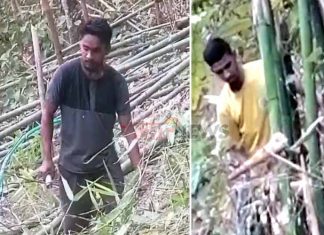
During the same period, six people were killed and 37 abducted (including 26 rubber plantation workers in Bandarban) by military-backed vigilante groups. Two attacks on public gatherings occurred, injuring two women, including one who was shot.
Seven people were killed and 41 abducted by the Santu faction of the Parbatya Chattagram Jana Samhati Samiti (PCJSS). One child was injured in indiscriminate gunfire, and at least 20 people were physically tortured by this group. There were also incidents of obstruction and attacks on student-public gatherings in Rangamati.
There were four communal attacks carried out by security forces and Bengali settlers. Three people were killed by army gunfire and torture, and one person was killed by settler attacks.
At least 17 women were subjected to sexual violence during this period. Among them, one woman was raped and murdered, seven were raped, and nine others were subjected to attempted rape or sexual harassment.
Land grabbing incidents occurred in four locations. In Bandarban, land grabbers burned down 17 indigenous homes.
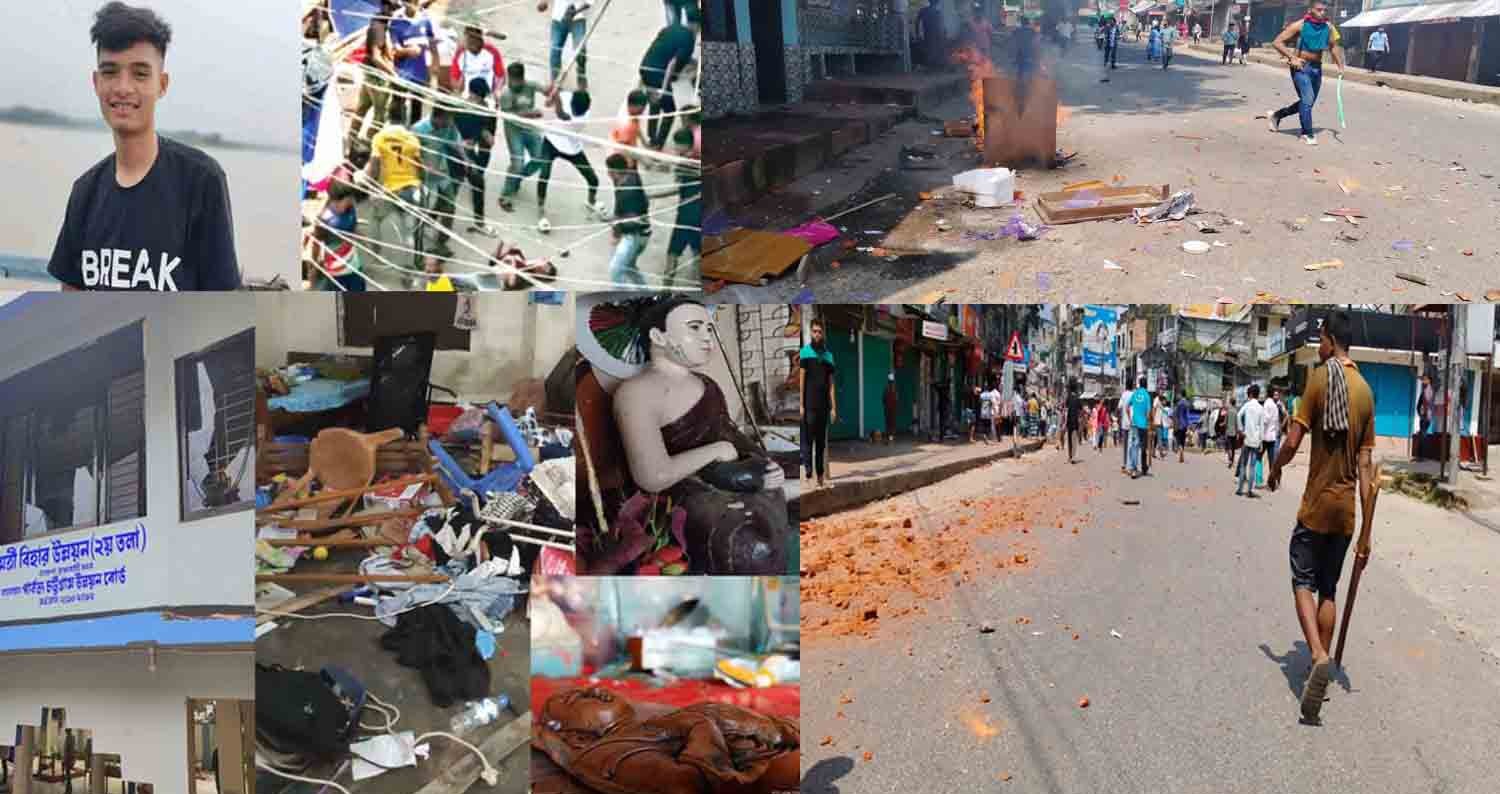
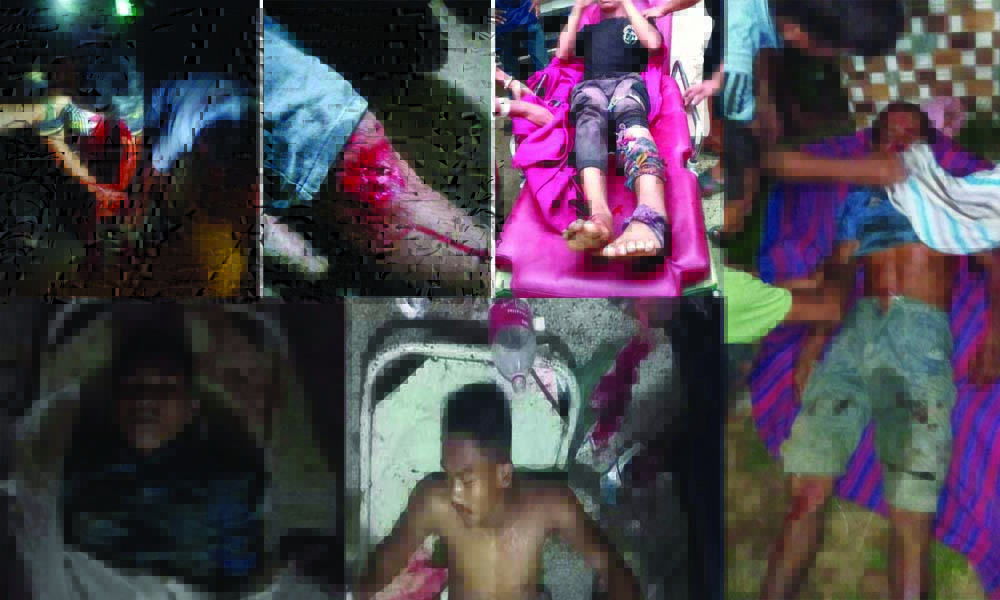
The most violent communal attack on indigenous people under the interim government occurred on September 19–20, 2024, in Dighinala (Khagrachari), Khagrachari town, and Rangamati. In these attacks, Dhan Ranjan Chakma was killed by brutal army torture in Dighinala; Junan Chakma, a college student, and Rubel Tripura, a construction worker, were killed by indiscriminate army gunfire in Khagrachari; and in Rangamati, college student Anik Chakma was killed in a barbaric settler attack. At least 138 people were injured in these incidents. Over 400 shops, homes, and other properties were burned, vandalized, or looted. After the attack, the Home Affairs Advisor and two other advisors visited the sites. Although the government formed an investigative committee, the report has yet to be published.
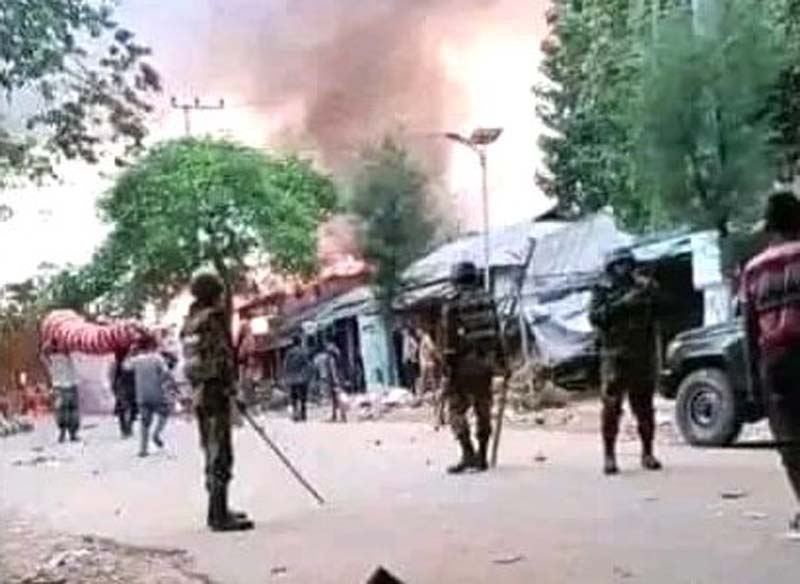
Before the impact of those attacks had subsided, a schoolteacher in Khagrachari was beaten to death by a mob on October 1, following an allegation of raping a schoolgirl. In response, settlers launched another attack on indigenous businesses and homes in Khagrachari town. Hospitals and various businesses owned by indigenous people were vandalized, resulting in damages worth more than Tk 130 million. At least six indigenous people were injured in this attack.
During the past year of the interim government, no action has been taken against members of the security forces involved in human rights violations such as killings and enforced disappearances during the Hasina regime. Instead, those same personnel have continued to carry out extrajudicial killings, wrongful arrests, illegal searches of innocent villagers’ homes, and torture. This pattern remains ongoing. Under the guise of military operations, there have been continuous raids, arrests, home searches, and harassment in village after village.
The vigilante forces created during the Hasina regime continue to receive backing from the state. These groups are still committing murders and other crimes. Meanwhile, Hasina ally Santu Larma has been kept in his position as Chairman of the Regional Council. His armed group continues to operate freely, committing murders, abductions, extortion, and various other crimes with impunity.
In short, Dr. Yunus’s interim government has continued the same policies of the former fascist regime in dealing with the CHT. By maintaining military oppression, the conspiracy to eliminate indigenous communities is still in motion. As a result, even under Yunus’s rule, the indigenous people of the hills are forced to live in constant insecurity.
—–