
Commentary
Manabendra Narayan Larma, founder of the Parbatya Chattagram Jana Samhati Samiti (JSS) and former member of the National Parliament, was killed on November 10, 1983, by assassins from within his own party. Yet, the political context in which his fellow comrades attacked the central headquarters and murdered him has never been fully discussed.
Although both current factions of the JSS now commemorate his death anniversary every year, they remain silent about the circumstances surrounding it. However, November 10 marked a turning point in the political life of the Jumma people, and understanding that context is essential to grasp its historical significance.
After the assassination of Sheikh Mujibur Rahman on August 15, 1975, M.N. Larma went into hiding and took responsibility for leading an armed movement. About a month later, on September 25, his brother Santu Larma was arrested in Kukichara, Khagrachari, with Indian currency and cartridges. At that time, he was the Field Commander of the Shanti Bahini, the JSS’s armed wing.
In Santu’s absence, the Shanti Bahini began armed operations. In response, the Bangladesh government initiated large-scale military deployment and settler rehabilitation programs in the Chittagong Hill Tracts. To resist this resettlement, the Shanti Bahini formed a task force led by Debjyoti Chakma (alias Deben), which began launching armed attacks on newly settled groups.
To stabilize the volatile situation in the Hill Tracts, President Ziaur Rahman’s government released Santu Larma on January 22, 1980. Renowned Indian journalist Subir Bhaumik later remarked that Zia “greatly benefited” from this decision.
Before his release, Santu Larma submitted a 43-page handwritten document to the Ministry of Home Affairs of Bangladesh. After his release, he allowed Priti Kumar and others to read it. According to Priti Kumar, the document contained many confidential details about JSS’s internal affairs, and in its conclusion, Santu wrote that the problems of the Chittagong Hill Tracts could be solved through social, cultural, and economic development.
In mid-May 1981, Santu Larma rejoined the party. Shortly afterward, when M.N. Larma took leave for special work, he appointed Santu as acting president. Upon assuming this role, Santu immediately took two steps:
- Ordered a halt to attacks on settlers, and
- Dissolved the task force led by Debjyoti Chakma.
These actions — along with his earlier submission of the 43-page document to the government and his unilateral dissolution of the task force without consultation — sparked serious debate and criticism within the party.
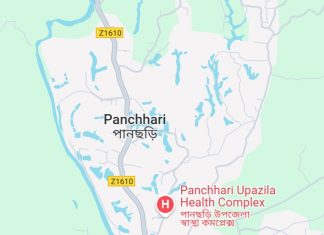
In this tense atmosphere, JSS held its second congress at a secret location in Panchari between September 23 and October 1, 1982. At the congress, two distinct factions emerged:
- One led by the Larma brothers (M.N. and Santu), advocating a policy of protracted struggle on strategic point of view with a quick resolution on tactical point of view, and
- Another led by Priti Kumar Chakma and Bhavatosh Dewan, whose followers sought a quick resolution with India’s assistance, aiming to separate the Hill Tracts from Bangladesh and merge with India.
The general public referred to Priti–Bhavatosh’s group as “Badi” (short) and the Larma group as “Lamba” (long).
In the vote to form the central committee, the Larma faction lost. However, for the sake of unity, both sides compromised and formed a joint central committee with M.N. Larma as president.
Despite this, the ideological divisions remained unresolved. Both factions continued mutual propaganda and accusations and counter-accusations, and by early 1983, tensions had reached a breaking point.
In an attempt to ease the crisis, the Larma faction invited Bhavatosh Dewan for discussions, but when he arrived at the headquarters on June 1, he was detained. The invitation had been a tactical ruse, as Bhavatosh maintained contact with Indian intelligence, and the Larma group’s real objective was to cut off the Badi faction’s connection with India.
When news of Bhavatosh’s capture spread, tensions escalated further. Both sides began preparing for armed confrontation. On June 4, the Larma faction seized a weapons depot in a special sector using a company loyal to them.
Ten days later, on June 14, they attacked the headquarters of the special sector and killed Amrita Lal Chakma (alias Boli Ustad), a military trainer known as the “Ostro Guru” (weapons master) of the Shanti Bahini. This attack made the Lamba–Badi civil war inevitable. Many later said that without the June 14 attack, the November 10 killings would not have happened, as it provoked the Badi faction to seek revenge.
Regarding the June 14 incident, JSS central leader Rupayan Dewan wrote:
“In that temporary barrack, during discussions with M.N. Larma and Santu Larma, I learned that a decision had been taken to attack the rebels’ (i.e., Priti group’s) Golokpudima camp, and that I was invited to lead the attack. However, due to ill health, I could not do so.”
The attack was instead led by Ushaton Talukder. The assault involved mortars, rockets, grenades, LMGs, and other weapons. The Larma faction later claimed that their June 14 attack foiled a Badi group plan to strike the central headquarters, allegedly devised by special sector commander Tribhangil Dewan.
According to Priti Kumar Chakma, a few days before the June 14 attack — on June 11 — both factions had met at the home of a villager near the Logang River in Maichya Chakma (Sidolya) village, Panchari. They had agreed that once tensions subsided, the Priti group would go to the central headquarters code-named Batti. But after June 14, the situation deteriorated so badly that they never went.
Even after the June 14 attack, two rounds of peace talks were held between the factions, mediated by a third party. The final high-level meeting took place from September 29 to October 1, 1983, in Agartala, the capital of Tripura, India, chaired by M.N. Larma himself.
After three days of discussions, both sides agreed on 13 points, including:
- Ending mutual attacks and propaganda, and
- Releasing detained members held by the opposite side.
However, just one month and ten days later, the Badi group launched a commando-style assault on the Lamba group’s headquarters, killing M.N. Larma and eight of his associates.
Even today, there is no clear explanation as to why the Badi group resumed hostilities after the Agartala agreement, nor why the Larma faction earlier attacked the special sector on June 14, seized the armory on June 4, or detained Bhavatosh Dewan under the guise of negotiation — or whether M.N. Larma himself approved or ordered these actions.
The Badi group also accused Larma of nepotism. According to Priti Kumar Chakma, when M.N. Larma learned of the 43-page document submitted by Santu Larma to the government, he initially expressed displeasure. But after private conversations with his brother, he stopped mentioning the issue and began to side with Santu, a matter that still calls for deeper investigation.
In conclusion, while the Badi group bears direct responsibility for the killing of M.N. Larma, the authoritarian and undemocratic attitudes of the Larma faction’s top leadership also played a major role in creating the conditions that led to his death.
When political and organizational conflicts within a movement are not resolved democratically, they inevitably escalate into undemocratic, military confrontations. Ultimately, the death of M.N. Larma was the tragic consequence of the JSS’s failure to resolve its internal disputes through democratic means.
(November 11, 2025)
————-