Drying streams, wells leave remote Rangamati communities in crisis
Other Media desk, CHT News
Tuesday, April 21, 2026
For people in remote hilly areas, late spring and the onset of summer dry up springs and wells, creating a shortage of drinking water.
Their year-round reliance on spring water forces many to dig holes near sources and install pipelines to collect what little water remains.
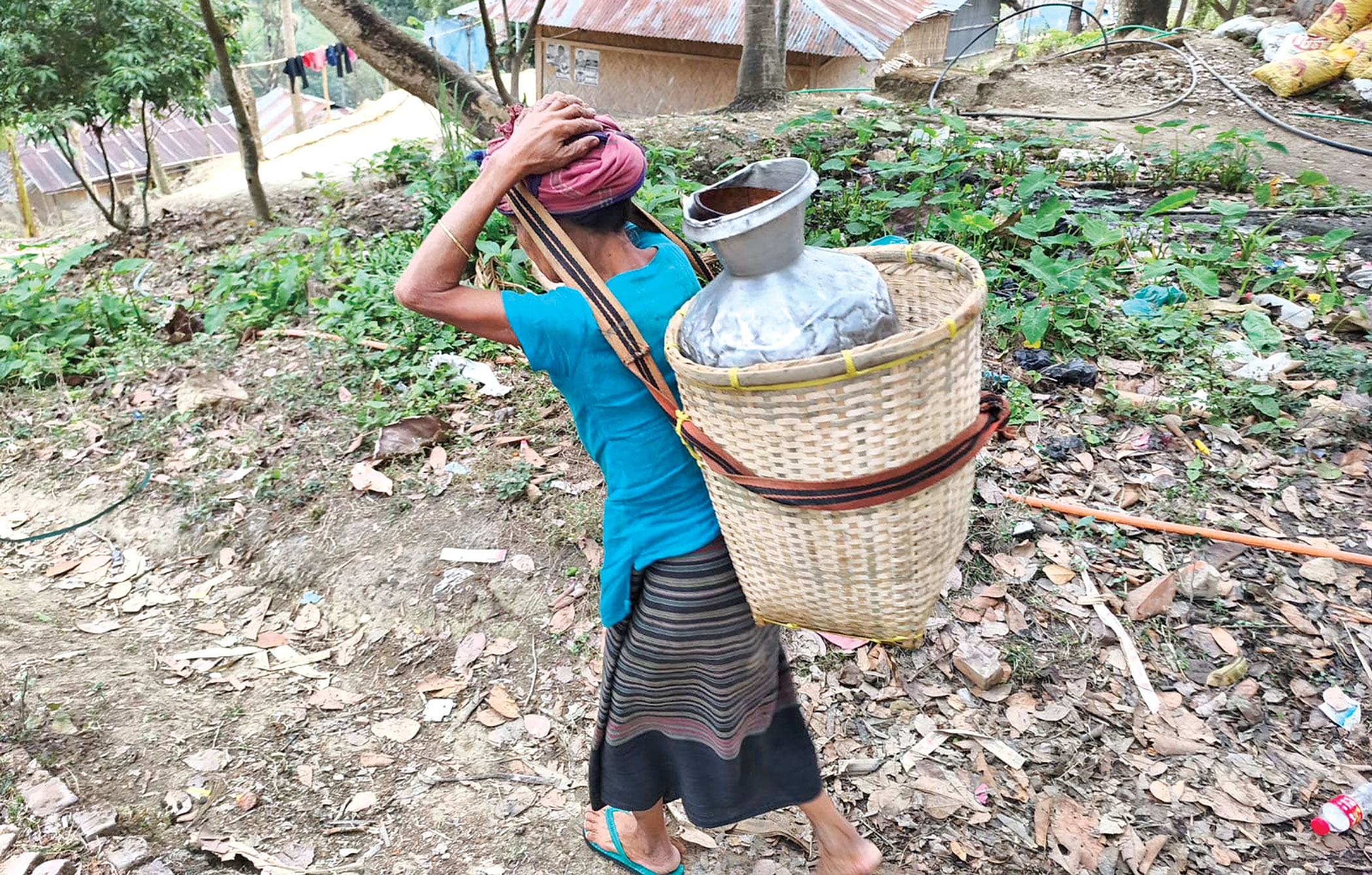
More than 50 families in the Sapchari Joint Farm area of Rangamati Sadar upazila face a shortage of potable water during the summer, particularly from March.
To cope, residents installed a pipeline from a nearby jhiri (small stream) under Furoman Hill to collect water for cooking, bathing and drinking.
But the jhiri has recently dried up, leaving them struggling. Even when a small amount of water flows through the pipeline, they have to wait for hours.
The Roads and Highways Department in Rangamati recently supplied 5,000 litres of drinking water to ease their suffering, but residents say it is far from enough.
“We placed a water tank next to the jhiri to collect water through a pipeline, but we still suffer during the summer and have to wait from early morning till noon to collect water. The situation will worsen in a few days,” said Kalindi Chakma, a resident.
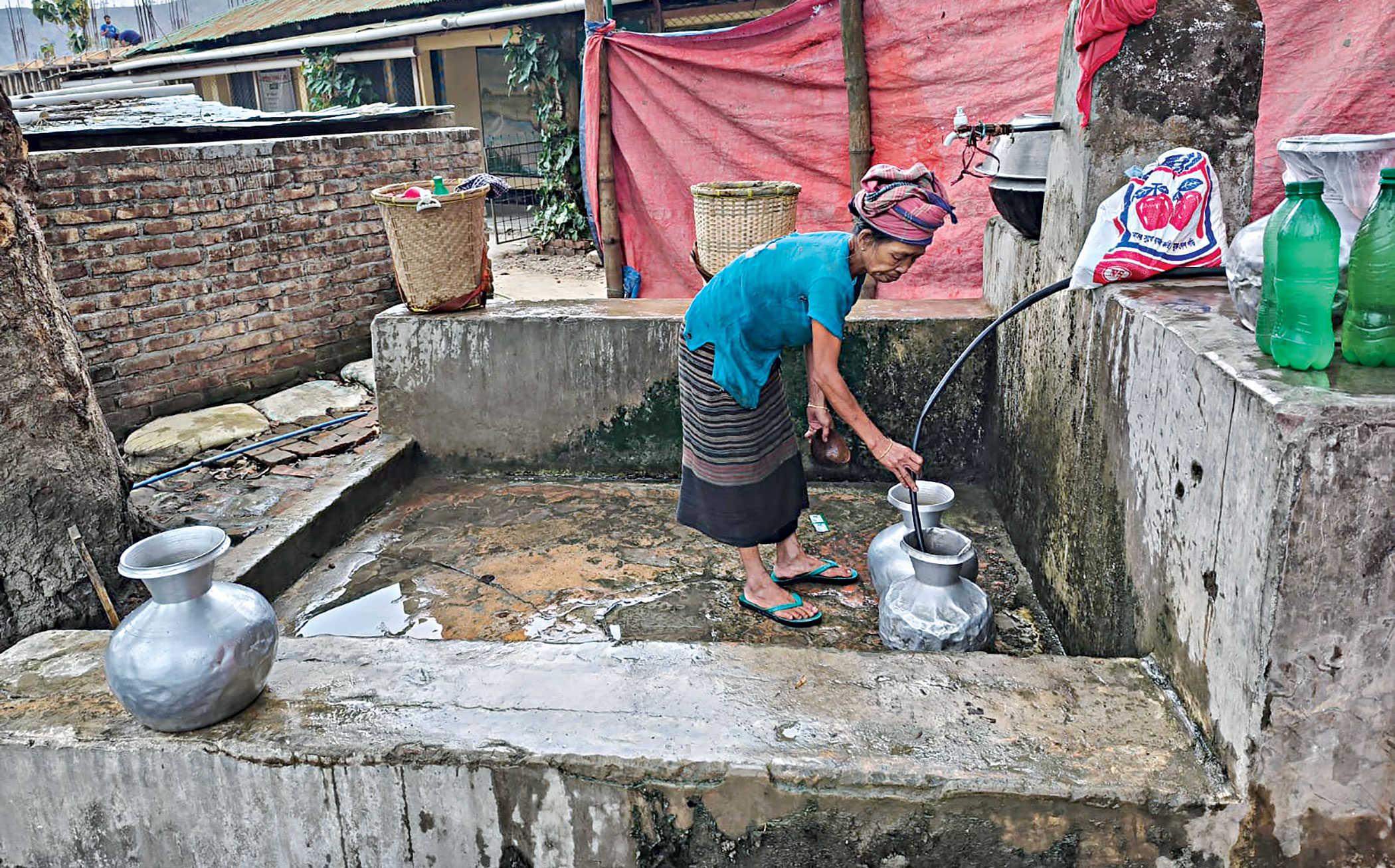
Another resident, Jiken Chakma, echoed the concern.
“We couldn’t install a deep tube well due to rocks underground, and digging a well is unlikely to yield water. We will always struggle to get water,” he said.
The crisis is not limited to one area. Remote upazilas such as Baghaichari, Barkal, Juraichari, Belaichari and Kaptai are also facing shortages.
In Devtachari village of Wagga union in Kaptai, home to about 70 families, a stream that once held water year-round has nearly dried up.
“We used to bathe in the stream and use it for household chores, but now it stays dry most of the year except during the monsoon,” said resident Liton Tanchangya.
“Those who can afford it install tube wells and use motor pumps, while others collect water from distant wells. In some areas, even well water is unavailable,” he added.
Rekhin Chakma of Chelachhara village in Kawkhali said, “During Falgun–Chaitra, we can sometimes get water by digging 8–10 feet, if we are lucky.”
Sadhana Devi Chakma from the same village said, “Sometimes we have to fight for water. After waiting in long lines for hours, we often manage only a pitcher.”
Sabuj Chakma, founder of the Biodiversity Conservation Society of CHT, said the main cause of the crisis is the destruction of natural forests.
“Deforestation and monoculture plantations, including teak, are drying up mountain streams and waterfalls. Climate change is worsening the situation with droughts and erratic rainfall. Planting native species along waterways could help,” he said.
Parag Barua, executive engineer of the Public Health Engineering Department in Rangamati, said, “Water demand rises during the dry season. We are identifying the worst-affected areas and prioritising them in our work.”
Source: The Daily Star
————