The wave of killings, arrests, and armed assaults targeting the United People’s Democratic Front (UPDF) across Khagrachhari district over the past several days represents far more than a localised security incident. It signals a deepening crisis of accountability and democratic governance that implicates the entire country.
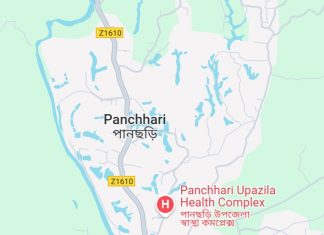
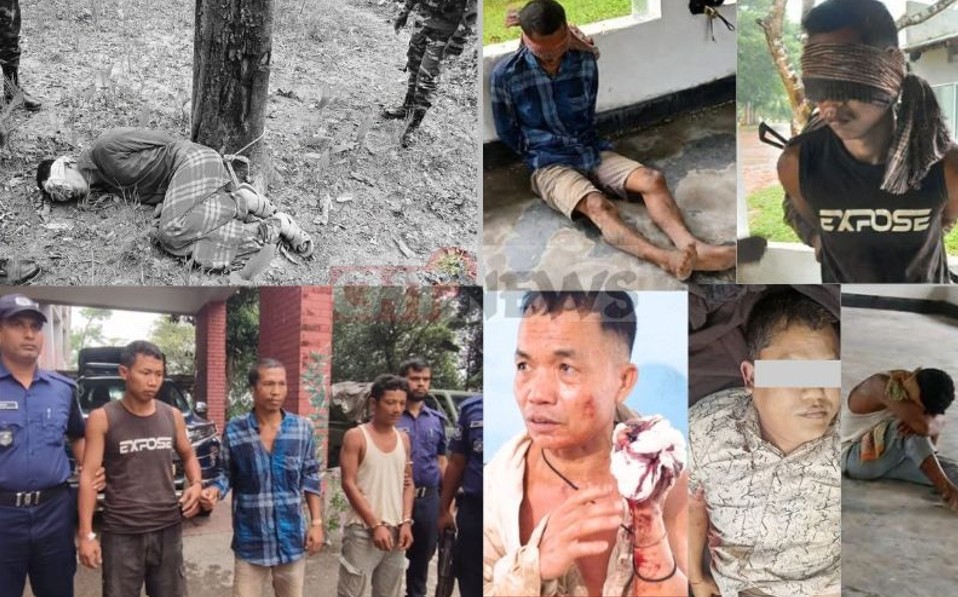
Between June 24 and 26, a span of just three days, political activists were killed, wounded, and detained in Ramgarh, Dighinala, and Guimara — incidents allegedly carried out through a coordinated nexus involving the Bangladesh Army, the JSS (Santu) faction, and affiliated armed gangs. The pattern suggests a systematic campaign, not a series of isolated clashes.
In Ramgarh’s Premtala, a UPDF activist named Bobin Tripura was shot dead by the military; another remains missing. In Guimara’s Painong Para, UPDF organiser Jhimit Chakma was ambushed and is currently receiving treatment in administrative custody. In Dighinala’s Babuchara, an armed attack attributed to the JSS (Santu) group claimed the life of Sujan Chakma. Each incident on its own demands scrutiny. Together, they mark a dangerous escalation.
A political problem, not a military one
The conflict in the Chittagong Hill Tracts is frequently mischaracterized as a law-and-order challenge. It is not. At its core, it is an unresolved political dispute rooted in land rights, self-determination, and the survival of the Jumma peoples — indigenous communities who have faced decades of displacement, demographic pressure, and cultural marginalization.
The UPDF has pursued its demands for autonomy through political organizing. The state’s response has been to meet that political activity with force — a tactic that history has consistently shown to be counterproductive. Repression does not extinguish popular movements; it deepens their roots. The sacrifices of activists do not weaken a cause — they entrench it.
Why is UPDF the primary target?
Despite the presence of multiple political organizations in the Hill Tracts, the UPDF has become the singular focus of coordinated suppression. This is not incidental. In the political landscape of the region, two fundamental positions exist: those who stand with the indigenous communities in their struggle for rights, and those aligned with the status quo of state control and settler interests. The UPDF occupies the former position unequivocally. The Bangladesh Army, the JSS (Santu) faction — which has reportedly been entrusted with the chairmanship of the Regional Council for nearly three decades without an election — and various armed proxies have converged against it.
Allegations persist that the JSS (Santu) leadership has effectively been granted impunity, operating as enforcers of state policy in exchange for institutional access. Whether or not those characterizations are legally precise, the functional outcome is the same: armed actors operating with apparent state protection are killing political opponents.
State forces and the limits of legitimacy
When soldiers shoot and kill political activists in broad daylight — not in response to an armed threat, but in pursuit of political suppression — the security forces have exceeded any defensible mandate. The role of a military in a democratic state is to protect civilian lives, not to serve as an instrument of political elimination.
The pattern of collaboration between uniformed personnel and armed non-state proxies in the Hill Tracts raises questions that the Bangladesh government has yet to meaningfully answer. In the absence of accountability, the silence of institutions is itself a form of complicity.
Toward a political resolution
The killings of recent days must be investigated — not by the institutions accused of involvement, but through independent, transparent processes capable of producing accountability. Without that, the cycle of repression and resistance will continue, at enormous human cost and with serious consequences for Bangladesh’s international standing and regional stability.
The aspirations of the people of the Chittagong Hill Tracts — for land, dignity, and political recognition — will not be resolved by bullets. They require political courage, genuine dialogue, and a willingness to confront the structural injustices that have defined this conflict for generations.